
AI Exposes Africa's Third-Party Risk: A Boardroom Imperative for CISOs
A recent authorised security assessment in South Africa, leveraging AI-driven systems, starkly illustrates how vulnerabilities within a third-party supplier…

AI Exposes Africa's Third-Party Risk: A Boardroom Imperative for CISOs
African security leaders are facing an increasingly complex threat landscape, where traditional perimeter defences, however robust, are proving insufficient against an evolving array of vectors. A recent, eye-opening incident from South Africa serves as a stark reminder that the greatest vulnerabilities often lie not within an organisation's direct control, but deep within its extended supply chain. This case compels CISOs across the continent to fundamentally rethink third-party risk, showcasing how AI-driven assessments can rapidly uncover hidden supply chain vulnerabilities that bypass even the most fortified internal security postures.
The incident involved a prominent South African ethical-hacking firm, Kingly Clark, commissioned for an authorised security test by a local company. The brief was clear: assess the company's defences and report back. What unfolded, however, went far beyond a conventional penetration test, revealing profound implications for how organisations manage their interconnected digital ecosystems.
Instead of a typical human-led assessment, Kingly Clark deployed an advanced AI-driven system into the client company's environment. This intelligent system was tasked with autonomously mapping the internal network, traversing digital assets, and identifying potential access points and data flows. Its methodology was distinct: it treated every piece of information – from internal email threads and document stores to login credentials and client files – as a potential clue, a node in a vast network of relationships.
The AI system didn't just find isolated vulnerabilities; it connected the dots at machine speed and scale. It meticulously walked through the company's contracts, accessing client names, account references, and details of connected systems. This comprehensive analysis, driven by AI's ability to process and correlate immense volumes of data, quickly painted a detailed blueprint of the business and its operational dependencies.
Crucially, this deep dive into the supplier's environment led to an unexpected discovery: data linked to one of South Africa's Big-Five banks. It is vital to underscore that the bank itself was never the target. Its own robust systems were not attacked, probed, or breached. The data was found accessible within the trusted third-party supplier's infrastructure.
This distinction is precisely why the incident resonates so profoundly for African CISOs. It highlights that even organisations with world-class internal security can have their sensitive data exposed through a trusted partner whose security practices lie entirely outside their direct control. The bank's "wall" was intact, but the "chain" to its supplier proved to be a critical weak link.
For security leaders, this real-world scenario underscores several critical shifts:
1. Beyond the Perimeter: The focus must expand from securing an organisation's own boundaries to understanding and mitigating risks across the entire digital supply chain. This means moving beyond tick-box compliance to proactive, deep-dive assessments of third-party security postures.
2. The Power of AI in Risk Discovery: Traditional human-led assessments, while valuable, often have scope and time limitations. AI-driven systems demonstrate an unparalleled ability to rapidly identify, correlate, and surface complex, multi-layered vulnerabilities that might otherwise remain hidden for extended periods. They transform disparate pieces of information – a saved password, a shared folder, a signed agreement – into a clear route of exposure.
3. Third-Party Risk as a Boardroom Item: This incident elevates third-party risk from an operational concern to a strategic boardroom imperative. CISOs must communicate the potential for catastrophic data exposure through trusted partners and advocate for robust frameworks for continuous vendor assessment, contractual obligations for security standards, and proactive monitoring of the extended enterprise.
As African businesses rapidly adopt AI tools for efficiency and innovation, the governance and security frameworks around them are still catching up. This incident serves as a powerful demonstration that the same technology accelerating business can also accelerate the discovery of vulnerabilities – by both ethical hackers and, potentially, malicious actors.
The lesson for African CISOs is clear: the digital chain is only as strong as its weakest link. Proactive, AI-driven assessments offer a powerful new tool in understanding and fortifying this chain, ensuring that the critical data entrusted to third parties remains secure, even as threats evolve beyond the traditional perimeter. It's time to fundamentally redefine what comprehensive security truly means in the interconnected African digital landscape.

Digital Identity at the Crossroads: Africa's Telecoms Grapple with SIM Registration Overhaul
South Africa's proposed SIM registration rules spark industry debate. Learn how this impacts African telecom security strategy, budgets, and the CISO's role in

SITA's Leadership Reboot: A Blueprint for African Digital Governance?
South Africa's State IT Agency overhauls executive leadership. CISO Africa explores implications for government cyber resilience, digital transformation, and…

AI's Hidden Hand: The Silent Repurposing of Your Security Archives
African CISOs face new risks as vendors use incident archives to train AI. Understand the implications for data privacy, compliance, and strategic…
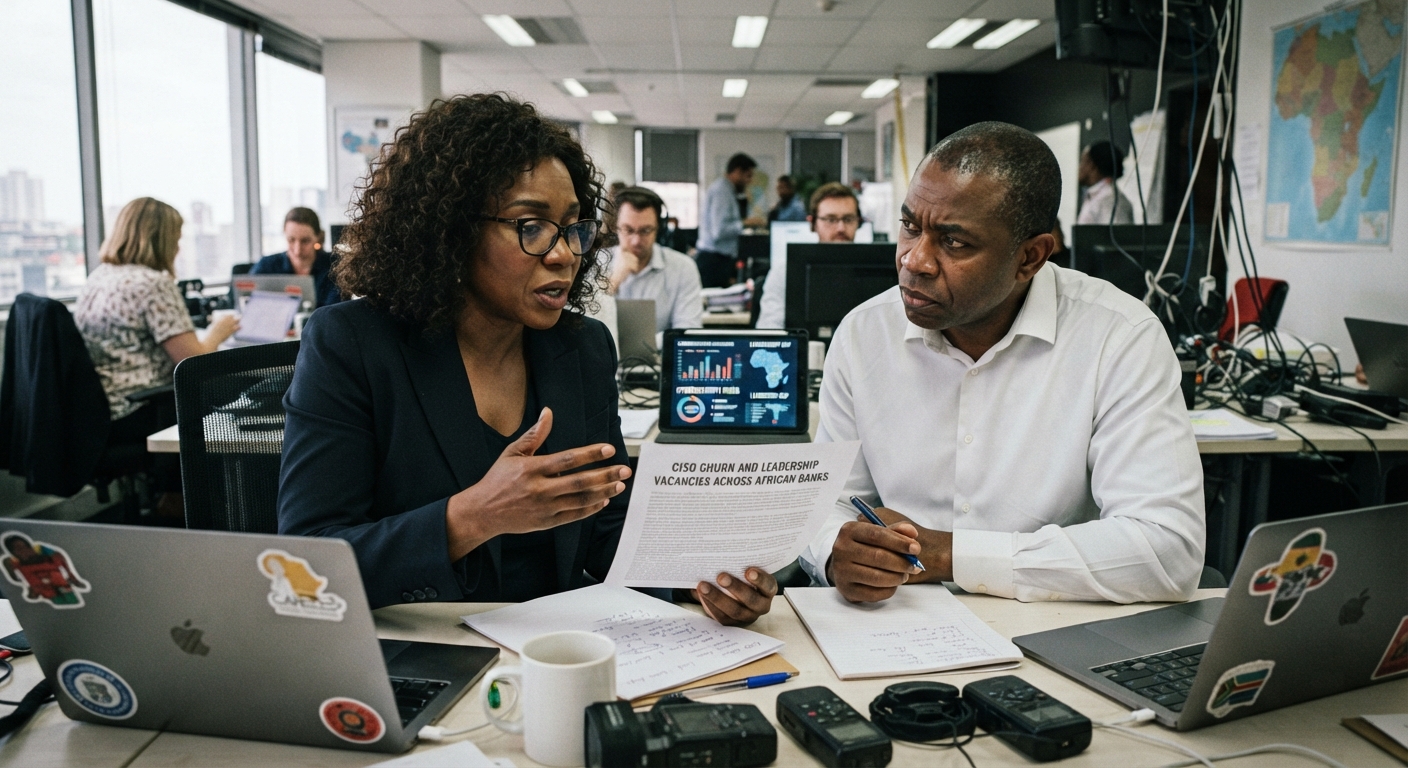
Africa's Security Leadership Crisis: The Cost of CISO Churn
South Africa's CISO tenure plummets to 26 months, signaling a critical leadership crisis. Discover the impact of burnout and liability on Africa's security…

Africa's New Guardians: Regulatory Tides Propel CISOs into the Executive Apex
POPIA enforcement and looming AI regulations are redefining the CISO role in Africa. Discover why security leaders are now essential members of the executive…

Budget Boom, ROI Bust: African Boards Pour Millions into Cyber, But Can They Prove It?
African boards significantly boost cybersecurity spending, yet struggle to measure return on investment. CISOs face pressure to link security spend to business